
Quick Answer: Cypriot food is Mediterranean in character but distinctly its own — shaped by Greek, Ottoman, Levantine, and British colonial influences. Expect slow-cooked meats, excellent halloumi, generous meze spreads, and a strong coffee culture. Eating well is straightforward and affordable if you know where to look and what to skip.
Editorial note: This guide is written for travellers who want to eat honestly and practically in Cyprus. It reflects real dining conditions, not tourism-board ideals. Pricing reflects 2025–2026 figures. Neither restaurants nor tourism bodies have contributed to or influenced this content.
Cyprus is not a difficult country to eat well in. The cuisine is generous by nature, ingredients are genuinely good, and the local tradition of meze — a shared progression of small dishes — means eating here rewards curiosity over caution. The traps are predictable and avoidable. The rewards, especially outside the main resort belts, are real.
What Food Is Cyprus Known For?
Answer capsule (40–60 words): Cyprus is known for halloumi cheese, souvlaki, kleftiko (slow-cooked lamb), sheftalia (herbed sausage), and the meze tradition. The island also produces excellent Commandaria dessert wine — one of the world’s oldest named wines — and zivania, a grape marc spirit similar to grappa. Food culture blends Greek, Ottoman, and Levantine influences.
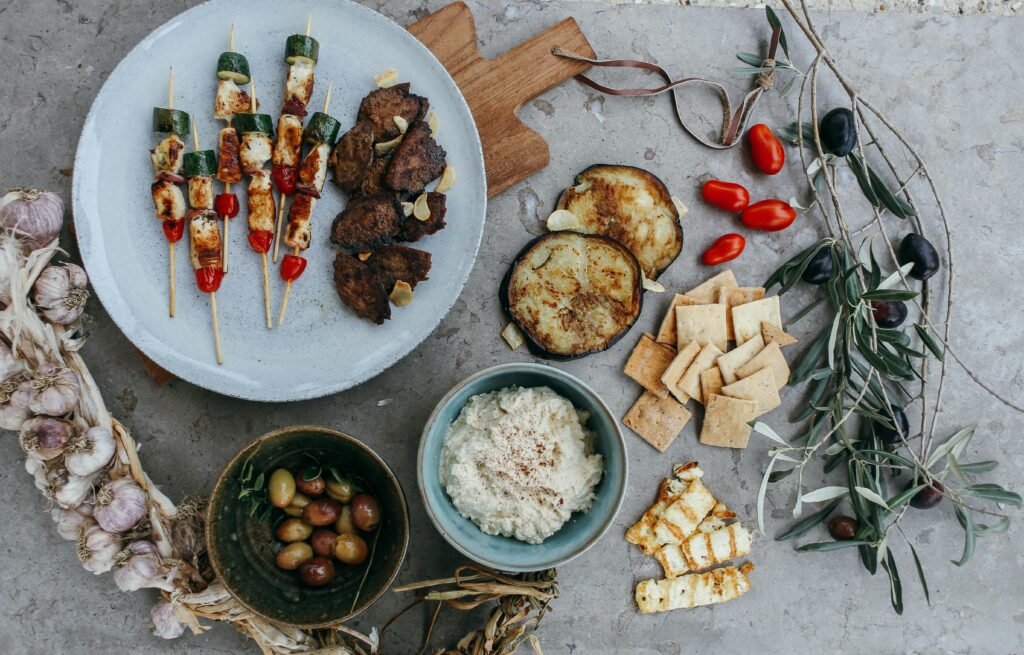
The Cypriot kitchen is built around patience. Many of the island’s most celebrated dishes — kleftiko, stifado, afelia — require long, slow cooking. This isn’t food designed for speed. It reflects an agricultural tradition of making the most of tough cuts, robust aromatics, and local produce.
What makes Cypriot cuisine distinct from mainland Greek food is the Ottoman and Levantine thread running through it. You’ll encounter tahini, bulgur wheat, kibbeh-style preparations, and spiced sausages alongside the more familiar Greek-leaning dishes. This crossover is most evident in northern Cyprus (administered by Turkey), where Turkish Cypriot food — known locally as Kıbrıs mutfağı — shares ingredients with the south while carrying its own character.
Signature Cypriot Dishes Every Traveller Should Know
Answer: The essential Cypriot dishes to order include halloumi, souvlaki, kleftiko, sheftalia, afelia, and trachanas soup. Restaurants across the island serve all of these, though quality varies significantly between tourist-facing and locally-oriented kitchens.
| Dish | What It Is | Best Context to Order It |
|---|---|---|
| Halloumi | Semi-hard cheese, grilled or fried; mild, squeaky, slightly salty | As a starter or with bread; buy fresh from village producers |
| Souvlaki | Pork or chicken skewers, often served in pitta with salad and tzatziki | Street-food stalls, casual souvlaki shops |
| Kleftiko | Lamb slow-cooked in a sealed clay oven with lemon and herbs | Traditional tavernas; Sunday lunch |
| Sheftalia | Minced pork and onion sausage wrapped in caul fat, chargrilled | Meze spreads; grills |
| Afelia | Pork marinated and cooked in red wine with coriander seeds | Inland villages; traditional restaurants |
| Stifado | Beef or rabbit stew with pearl onions, red wine, and warm spices | Cooler months; village tavernas |
| Trachanas | Fermented wheat and dried milk soup; slightly sour, very filling | Breakfast or lunch; home cooking |
| Loukoumades | Deep-fried dough balls with honey and cinnamon | Street food; bakeries |
| Kolokasi | Taro root, cooked with pork and celery in a casserole | Winter months; inland restaurants |
| Flaouna | Cheese and mint pastry, traditionally made at Easter | Bakeries in spring; village markets |
Understanding the Cypriot Meze Tradition
Answer: Meze in Cyprus is not a starter — it’s a full meal. A proper meze consists of 15 to 30 small dishes arriving sequentially over 2–3 hours, covering dips, salads, cheese, vegetables, grilled meats or fish, and desserts. Restaurants price it per person; you order it for the whole table.
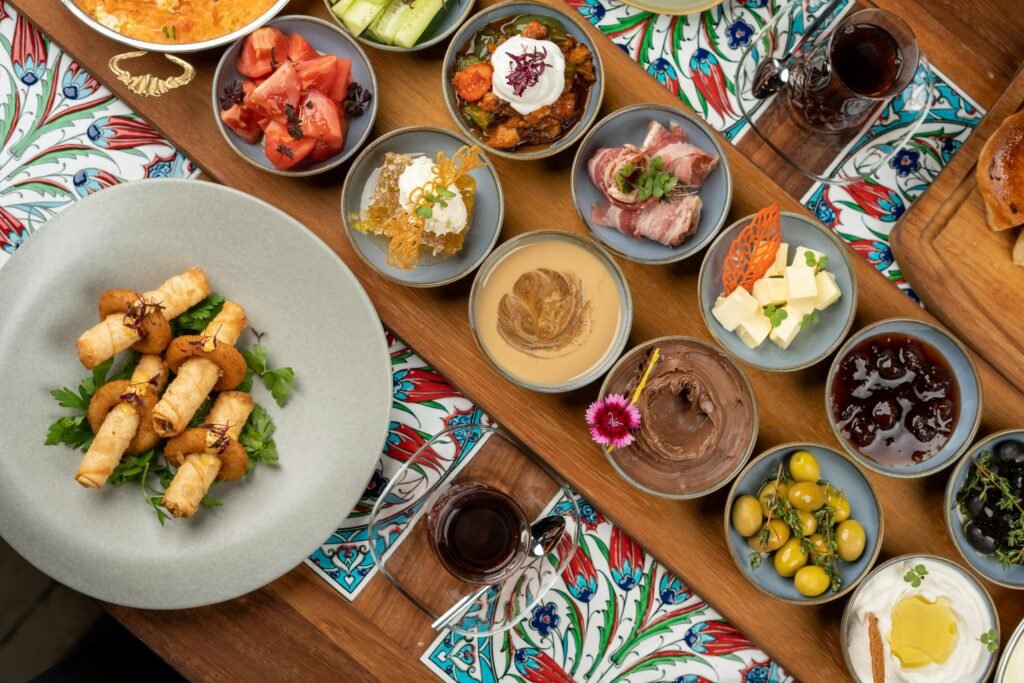
This is where many first-time visitors go wrong. They see “meze” on a menu, expect tapas-style snacks, and are caught off guard when a slow procession of dishes continues for the better part of an evening.
A meat meze typically costs €22–€35 per person. A fish meze — the more expensive option — runs €35–€50. Both include bread, dips, halloumi, and a series of cooked dishes. You don’t order individual meze items; the kitchen decides the sequence.
The quality of a meze spread varies enormously. In tourist-facing restaurants in Ayia Napa or Paphos harbour, meze can feel perfunctory — the same dozen dishes repeated with mediocre ingredients. In village tavernas or family-run restaurants away from the resort belt, a good meze is one of the more rewarding eating experiences in the eastern Mediterranean.
Practical notes:
- Meze is typically for a minimum of two people
- You must request vegetarian meze specifically — not all restaurants offer it
- Pace is slow by design; don’t rush it
- Bread arrives automatically and usually comes included in the per-person price
- Dessert (often fruit or a small sweet) usually concludes the progression
Where Do Locals Actually Eat in Cyprus?
Answer: Locals in Cyprus eat in neighbourhood tavernas, family-run psistaria (grill houses), village kafeneions, and souvlaki shops. They largely avoid the tourist promenades, harbourside restaurants, and resort strips — all of which charge more for comparable or lower quality.
Nicosia (Lefkosia)
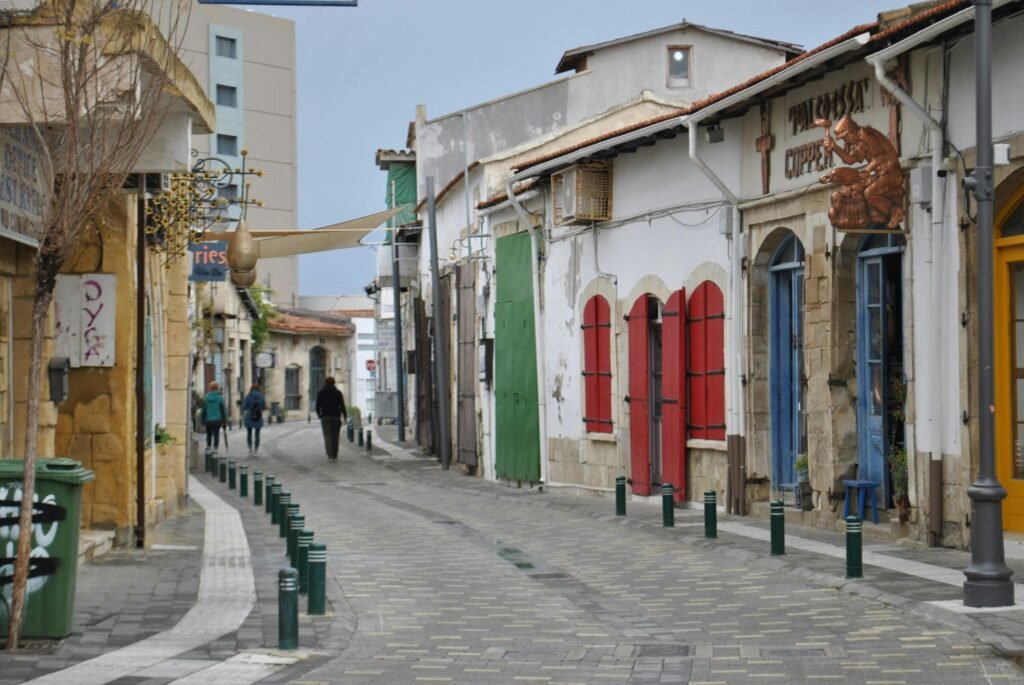
The capital is where the most authentic Cypriot dining currently exists, partly because it receives fewer tourists than the coastal cities. The area around Ermou Street and the streets branching off Athinon Avenue in the old city has a concentration of straightforward, locally-used restaurants. Laiki Geitonia (the reconstructed old quarter near the Ledra Street crossing) is more tourist-facing than it appears — food quality here is uneven and restaurants charge more than comparable places ten minutes’ walk away.
The suburb of Strovolos is where working Nicosia eats lunch. Unremarkable to look at, but reliable for honest grilled meat and affordable set lunches.
Limassol (Lemesos)
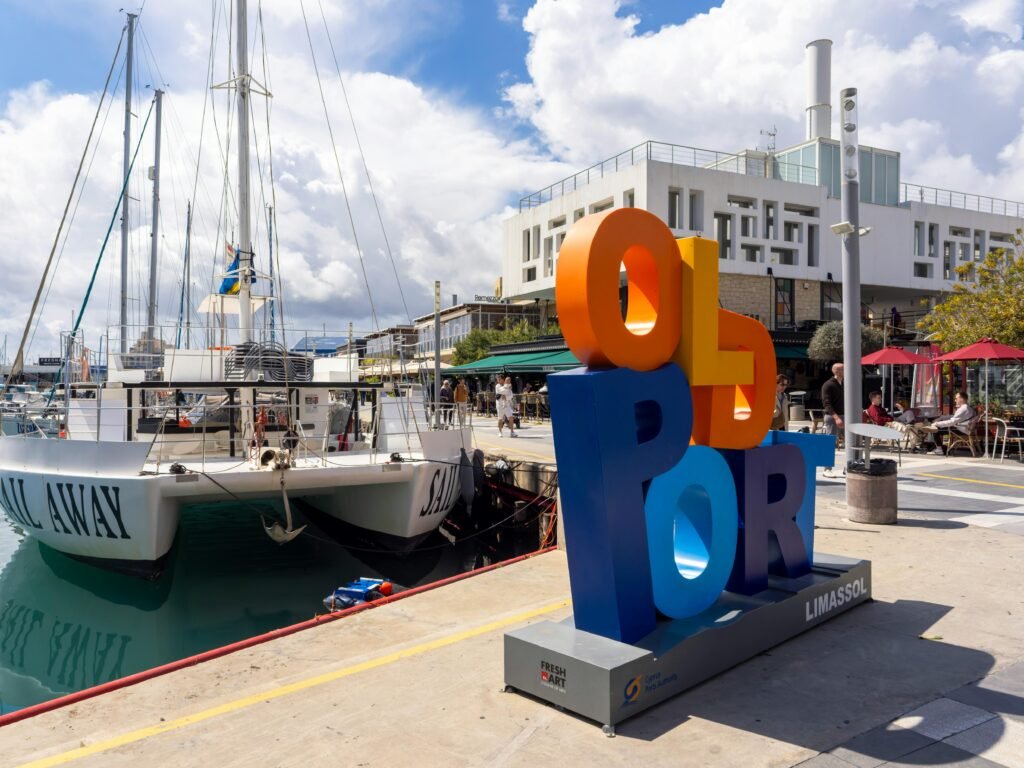
Limassol has undergone significant gentrification along the old port and the marina. The Limassol Marina area is expensive and primarily caters to yacht tourists and expats. For better value, the streets around Anexartisias and the covered Limassol Municipal Market reward exploration. The old town district between the castle and the market has family-run restaurants that see a genuine local lunchtime trade.
Larnaca (Larnaka)
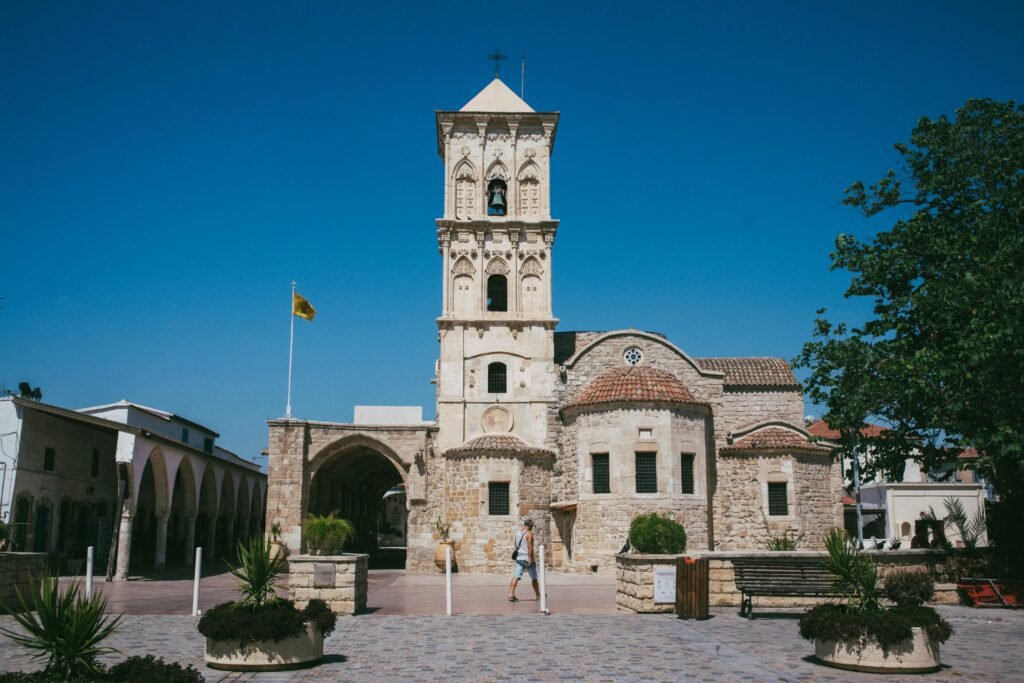
Larnaca’s seafront, the Finikoudes promenade, follows the tourist-trap logic of most seafront dining globally: visible location, average food, premium pricing. Better eating is found inland from the seafront, around the Turkish quarter (Skala), where smaller fish tavernas and grill houses cater to a local clientele. The Zenon Kitieos street area has a few reliable, unfussy options.
Paphos (Pafos)
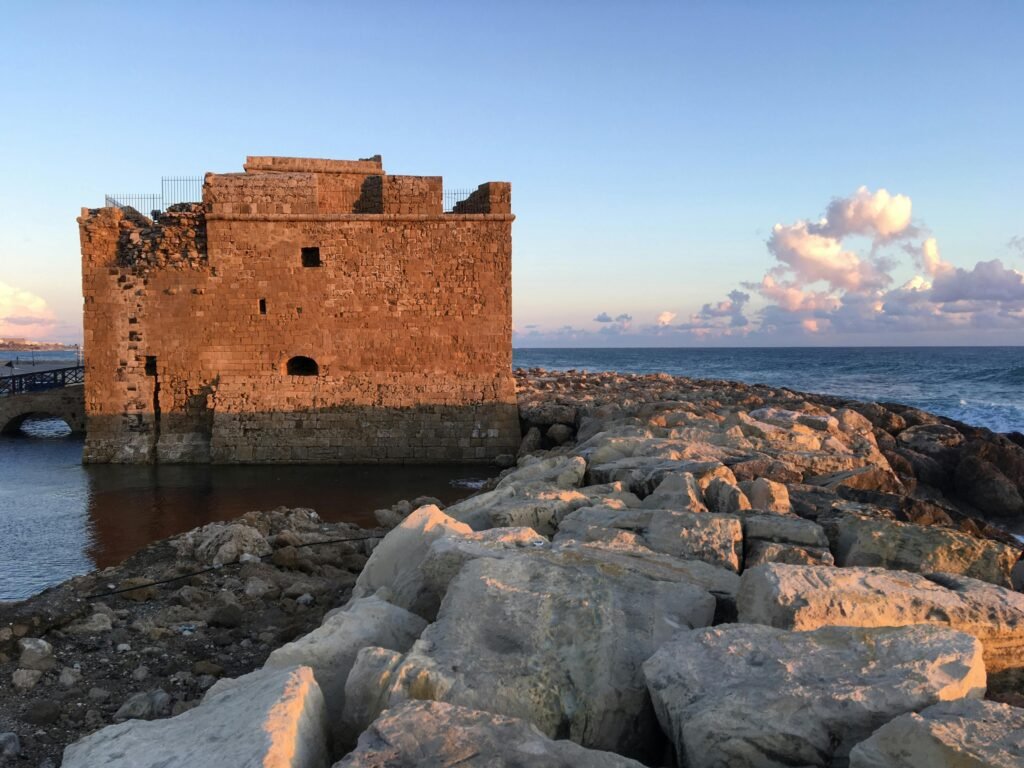
Kato Paphos — the area around the harbour — is the island’s most concentrated tourist dining zone. It caters almost entirely to British, German, and Scandinavian package tourists. The food is not terrible, but kitchens here rarely produce distinctly Cypriot cooking. For food that reflects the local kitchen, move inland to Ktima (the upper town), where the market area and the streets around Agoras Square support a different, locally-grounded restaurant culture.
Villages
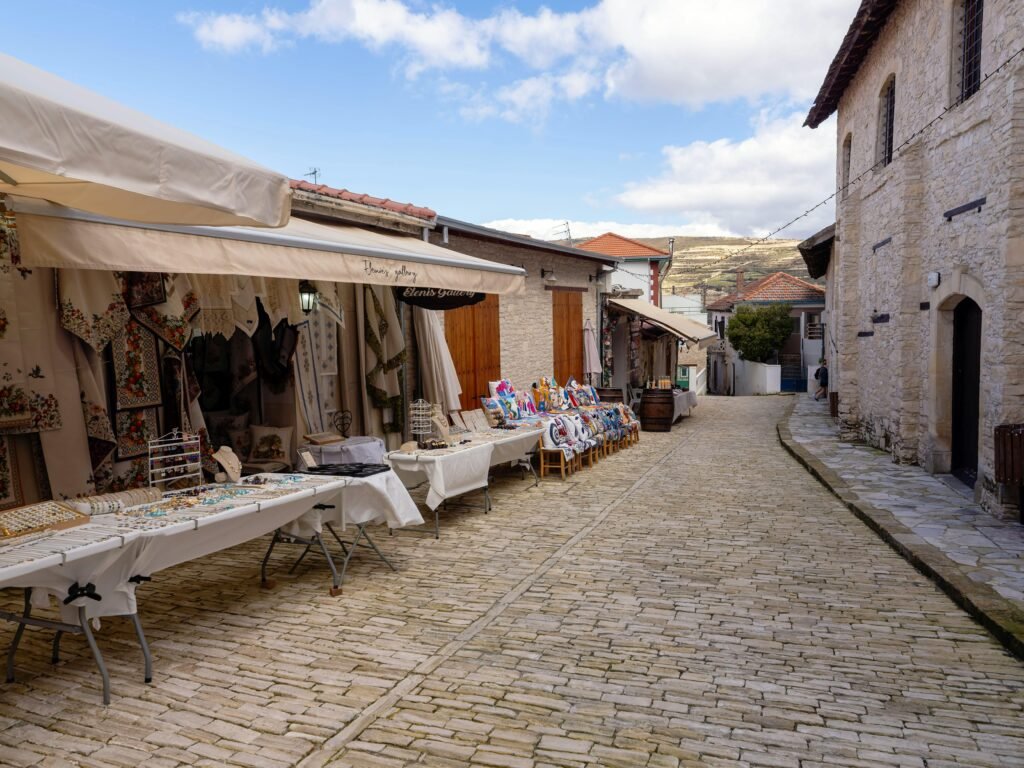
The Troodos mountain villages — particularly Omodos, Platres, and Kakopetria — and the villages of the Akamas and Pitsilia regions retain a genuine taverna culture. Village kitchens do kleftiko, kolokasi, and rabbit stifado better than anywhere else. Driving to lunch in a village taverna is a standard Cypriot Sunday ritual and the most reliable route to the island’s best cooking.
How Expensive Is Food in Cyprus?
Answer capsule: Cyprus is a mid-range European destination for eating out. Budget travellers can eat adequately for €12–€18 per day; travellers eating properly at sit-down restaurants should budget €25–€40 per person per day for food. Tourist-zone restaurants charge noticeably more for comparable quality.
| Meal Type | Budget Range (per person) | Notes |
|---|---|---|
| Souvlaki wrap (street) | €2.50–€4.50 | Most reliable cheap option |
| Bakery pastry or snack | €1.50–€3.50 | Tiropita, spanakopita, loukoumades |
| Taverna set lunch | €8–€14 | Includes main, salad, water |
| Mid-range dinner (à la carte) | €18–€30 | Starter, main, wine |
| Meat meze (full) | €22–€35 | Per person, includes bread |
| Fish meze (full) | €35–€50 | Per person; fresh fish version higher |
| Tasting menu (modern restaurants) | €55–€90 | Nicosia/Limassol fine dining |
| Cyprus coffee (single) | €1.50–€2.50 | Kafeneion prices |
| Frappe or cold coffee | €2.50–€4.00 | Tourist zones charge more |
| Local KEO or Leon beer (bar) | €2.50–€4.00 | Bottle; draught cheaper in kafeneions |
| Glass of local wine | €3.50–€7.00 | House wine lower end |
| Commandaria (dessert wine, glass) | €4.00–€8.00 | |
| Zivania shot | €1.50–€3.00 | Often complimentary after meals |
Tourist-zone premium: Expect to pay 25–40% more for the same food on tourist promenades, harbour fronts, and resort hotel restaurants. The food rarely drops in quality — owners simply charge visitor prices to people who won’t return.
Street Food Reality in Cyprus
Answer: Cypriot street food is limited but reliable. The dominant option is the souvlaki wrap — pork, chicken, or sheftalia in pitta with salad, tzatziki, and sometimes chips. Loukoumades (honey-soaked fried dough) appear at markets and festivals. True street food culture in the Southeast Asian or Latin American sense does not exist here.
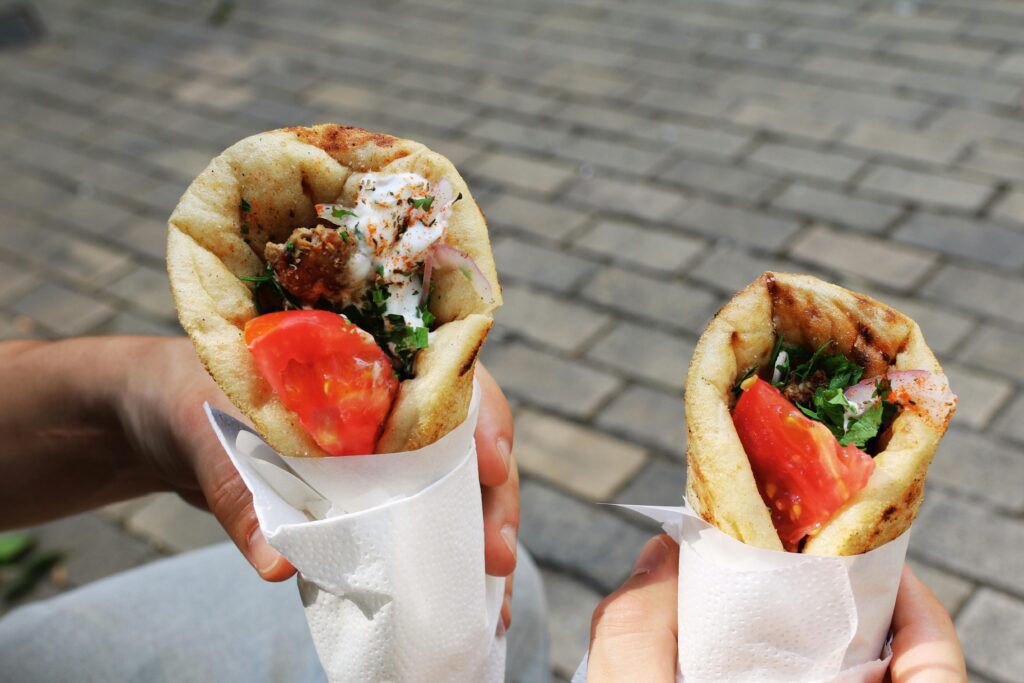
The souvlaki shop (psistaria) is Cyprus’s answer to fast food. Every town has several. They range from counter-service operations to sit-down grill houses. Quality varies but the format is consistent: choose your meat, choose your bread (pitta or plate), and it arrives quickly and cheaply.
What to order at a souvlaki shop:
- Pitta souvlaki with pork (hirino) is the standard
- Sheftalia in pitta is the local variant and worth ordering
- Mixed grill (mixed plate) is a sit-down option combining several cuts
- Ask for “me ola” (“with everything”) for the full garnish
Loukoumades stalls appear at festivals, village fairs, and occasionally as permanent kiosks near busy areas. The standard version with honey and sesame is far better than the chocolate-drizzled tourist versions found near archaeological sites.
Food markets: The best produce markets are the Nicosia Central Market (covered, near Ledra Street) and the Limassol Municipal Market. Both open morning hours (typically 06:00–13:00 on weekdays, closing earlier on Saturdays). These are the places to buy fresh halloumi, olives, local honey, dried herbs, and seasonal fruit.
Local Drinks: Coffee, Wine, Zivania, and Beer
Answer: Cyprus has a well-developed drinking culture built around Cyprus coffee (slow-brewed in a small pot), Commandaria dessert wine, local KEO and Leon beers, and zivania (a clear grape spirit). Frappe is widely consumed. International coffee chains exist but are secondary to the local kafeneion culture.
Coffee Culture
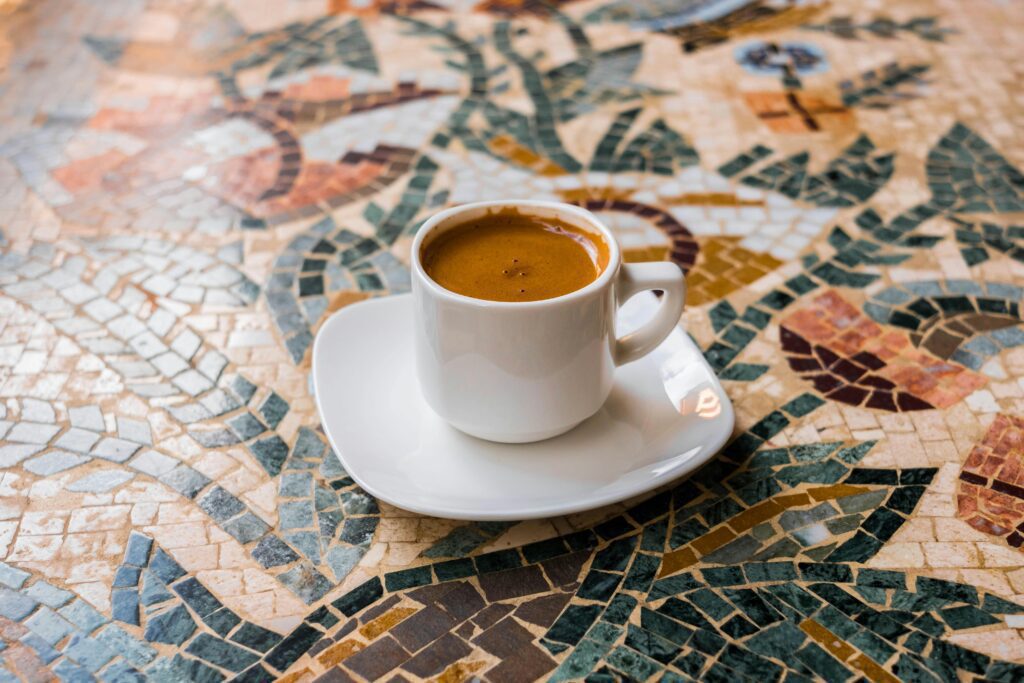
Cyprus coffee is prepared the same way as Greek and Turkish coffee — grounds simmered in a small copper pot (briki) and poured unfiltered into a demitasse cup. You order it by sweetness: sketos (no sugar), metrios (medium sweet), or glykos (sweet). Wait for the grounds to settle before drinking.
The kafeneion (traditional coffee house) is a genuine institution in Cyprus, particularly in villages and the older parts of towns. These are primarily frequented by older local men, functioning as social rather than commercial spaces. They are perfectly welcoming to travellers but can feel quite male-dominated in rural settings.
Frappe — instant coffee shaken with cold water and served over ice — is Cyprus’s most popular summer coffee. It tastes nothing like specialty coffee but is genuinely refreshing in 35°C heat.
Wine and Spirits
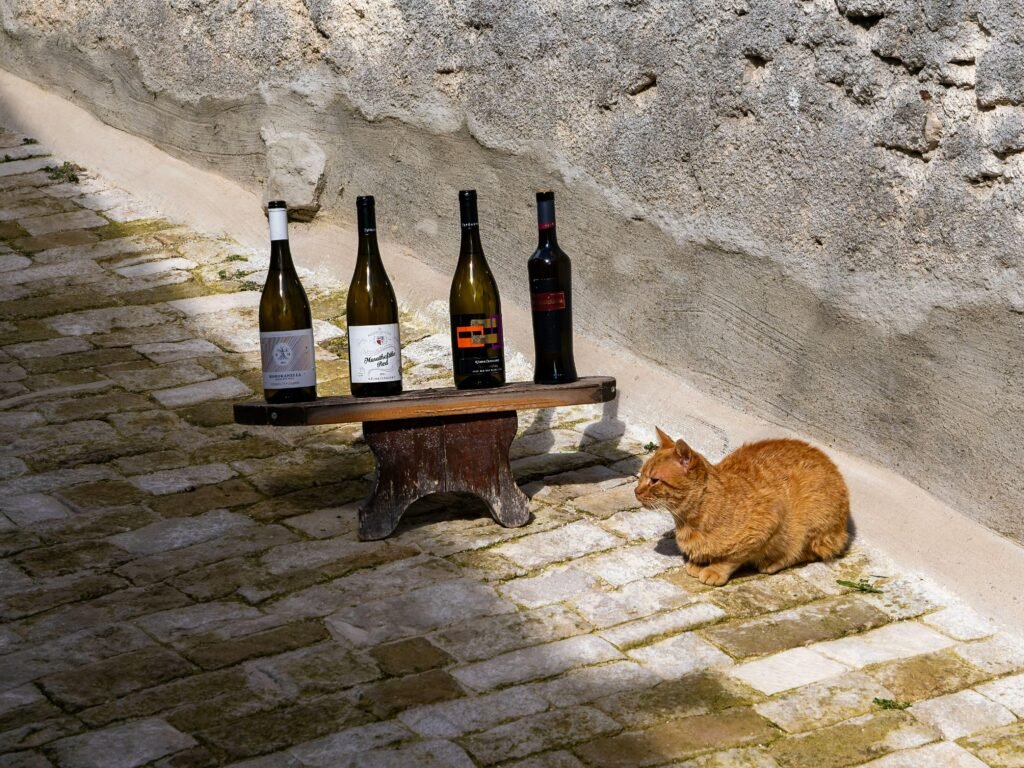
Cyprus is one of the world’s oldest wine-producing regions. The principal wine areas are the Limassol wine region (the Troodos foothills), Paphos district, and the Pitsilia highlands.
Commandaria deserves attention. Produced in 14 designated villages on the south-facing slopes of the Troodos Mountains, within the Limassol District, it is a sweet dessert wine made from sun-dried grapes — documented in its current form since at least the 12th century. It ranges from intensely sweet and raisined to complex and almost tawny in character. A glass with dessert or cheese is the appropriate context.
Notable local wineries that accept visitors include Kyperounda, Vasilikon, and Vouni Panayia — all in the Troodos area and approachable for a half-day visit combined with village lunch.
Zivania is a clear grape marc spirit — roughly 45–65% ABV — distilled from the remnants of wine pressing. Traditional restaurants often serve it as a complimentary shot at the end of a meal. Do not drive after zivania hospitality.
KEO and Leon are the two dominant local lagers. Both are competent, cold-served lagers suitable for the climate. Leon is slightly lighter. Neither is complex, but both are appropriate for a souvlaki at midday.
| Drink | Context | Typical Price |
|---|---|---|
| Cyprus coffee | Kafeneion, breakfast | €1.50–€2.50 |
| Frappe | Cafés, beach bars | €2.50–€4.00 |
| KEO/Leon beer | Bars, restaurants | €2.50–€4.00 |
| Commandaria | Restaurant, winery | €4–€8 per glass |
| Zivania | End of meal (often free) | €1.50–€3.00 |
| Local wine (glass) | Restaurants | €3.50–€7.00 |
| Bottle of local wine | Restaurants | €14–€28 |
What Should Tourists Avoid?
Answer: Avoid the restaurant strips immediately on tourist promenades in Ayia Napa, Paphos harbour, and Larnaca seafront for sit-down meals. These operations run on foot traffic and rarely prioritise food quality. The food is not always bad — owners simply price it for visitors, and Cypriot cooking at its best rarely appears on these menus.

Specific traps to navigate:
- Ayia Napa town centre and beach strip: The resort’s restaurant scene caters almost entirely to British package tourists. Full English breakfasts, fish and chips, and broadly “Mediterranean” menus dominate. You can eat decently here, but doing so requires effort. If you base yourself in Ayia Napa, consider driving 20 minutes to Larnaca or to villages in the Famagusta district for a more genuine meal.
- Paphos harbour restaurants: The view of the medieval castle from a harbourfont table is pleasant. The food is almost universally tourist-grade. Prices are high relative to what the food delivers. Walk uphill to Ktima for the same meze at considerably better value.
- “Traditional” restaurants in Laiki Geitonia, Nicosia: The restored old quarter of Nicosia has been tourist-facing for decades. The restaurants here are not terrible but they are not the local experience they present themselves as. Walk ten minutes north or south for restaurants that actually serve a working lunch crowd.
- Tourist menus with photographs: Menus with photographs of every dish tend to correlate with lower food quality and higher tourist pricing. This is not universal, but it is a useful heuristic in Cyprus as elsewhere.
Traveller Practicality: Dietary Needs, Solo Dining, Families
Answer: Vegetarians can eat reasonably well in Cyprus through meze without meat, side dishes, and halloumi-based options — but dedicated vegetarian restaurants are rare. Vegans face more challenges. Halal food is easier to find in Turkish Cypriot north Cyprus. Grill houses and casual restaurants accommodate solo diners without issue; meze typically requires a minimum of two people.
Vegetarian Reality
Cyprus is not a destination where vegetarianism is culturally central. Most traditional dishes feature pork, lamb, or fish. However, a vegetarian eating across the Mediterranean spectrum can navigate well enough:
- Halloumi (grilled or fried) appears on menus across every type of restaurant
- Tahini, hummus, taramasalata, and vegetable-based meze starters are abundant
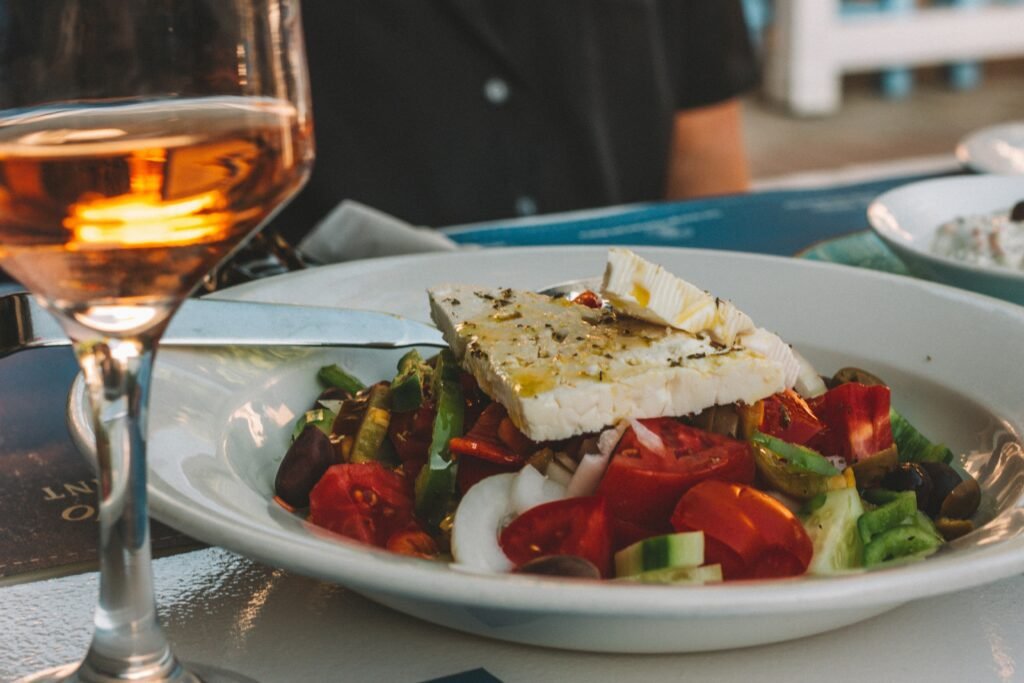
- Greek salad (Cypriot version, called horiatiki or village salad) is excellent and filling
- Spanakopita and tiropita (spinach and cheese pastries) are bakery staples
- You can request a dedicated vegetarian meze at many tavernas — confirm availability before you go
Vegans will struggle. Halloumi and yoghurt appear in much of the cuisine, and even many apparently vegetable-based dishes go into meat stock during cooking.
Families with Children
Cyprus is a practical family destination for eating out. Most restaurants, including traditional tavernas, genuinely welcome children. Larger establishments provide high chairs; smaller places are usually flexible. The meze format works well for families as children can eat across a variety of dishes without pressure. Souvlaki shops are particularly manageable for variable appetites and fussy eaters.
Allergy Awareness
Awareness of serious food allergies in smaller traditional restaurants is inconsistent. English communication in tourist areas is generally excellent, but explaining complex dietary requirements to kitchen staff in rural village restaurants may require patience or some basic Greek phrases. Nut awareness is lower than in northern Europe. Celiacs should note that bread accompanies almost every meal and cross-contamination in small kitchens is likely.
Local Dining Etiquette
Answer: Cypriot dining culture is relaxed and unhurried. Nobody pressures you to leave after eating; the table is yours for as long as you want it. Staff appreciate a tip of around 10%, though nothing is mandatory. Restaurants usually charge for bread and olives they bring to the table, though rarely more than €1–€2 per person.
What to expect:
- Water: Staff usually bring a jug of water automatically, particularly in tourist areas. In traditional kafeneions, ask for it.
- Bill: You must ask for it (ton logariasmo, parakalo). No one will bring it unsolicited.
- Sharing: Ordering multiple dishes and sharing across the table is the local norm. Ordering one dish each is also fine but misses something of the Cypriot dining rhythm.
- Pace: Expect meals to take longer than in northern Europe. This is not poor service; it is how meals here work.
- Tipping: 10% is appropriate for a sit-down meal with table service. Rounding up the bill is common. At souvlaki shops or bakeries, tipping is not expected.
- Cash: Widely accepted and sometimes preferred, particularly in rural areas and traditional kafeneions. Most city and tourist-area restaurants accept cards. Carry some cash for markets, village stops, and smaller establishments.
Best Areas for Food by Budget and Traveller Type
| Traveller Type | Best Area | Why |
|---|---|---|
| Budget | Strovolos (Nicosia) or any town souvlaki strip | Affordable grills, honest prices, local crowd |
| Couple seeking traditional food | Troodos village tavernas | Kleftiko, meze, Commandaria in proper setting |
| Wine tourism | Limassol wine region / Pitsilia | Winery visits, village restaurants, Commandaria |
| Solo traveller | Limassol old town | Diverse options, walkable, mix of budgets |
| Seafood focus | Limassol fish tavernas (avoid the marina premium) | Best quality-to-price fish in the south |
| Short stay (1–2 days) | Limassol or Nicosia | Most accessible combination of quality and variety |
| Family | Paphos upper town (Ktima) | Manageable, child-friendly, less hectic than harbour |
Where To Stay in Cyprus?
Hilton’s Cyprus portfolio is deliberately small but strategically varied: one core Hilton-branded hotel plus three Small Luxury Hotels of the World (SLH) partners focused on character and leisure. This limited selection of four properties makes the Hilton Cyprus page practical when you need different trip styles under one booking and loyalty programme. Hilton Nicosia functions as the clearest urban all-rounder — situated in the Engomi business district, it provides indoor and outdoor pools, a full-service spa, and sits within 5 km of central Nicosia.
Operationally, Hilton’s Cyprus page prioritises curated choice over volume. The standard Hilton experience centres on Hilton Nicosia; for a more intimate, boutique or resort-style stay, Hilton promotes its three SLH partners (The Agora Hotel in Pano Lefkara, Casale Panayiotis in Kalopanayiotis, and Columbia Beach Resort in Pissouri Bay) instead of expanding classic Hilton flagships. This mix reveals Hilton’s booking strategy in smaller markets as much as it reflects Cyprus itself.
| Hotel & Location | Best For | Unique Feature | Verified Rating | Action |
|---|---|---|---|---|
|
Hilton Nicosia 1 Achaion Street, Engomi, Nicosia, 2413, Cyprus |
Business & Conferences | Outdoor lagoon-style pool, full-service spa, indoor pool, executive lounge, and EV charging. | 4.6/5 | BOOK NOW |
|
The Agora Hotel, an SLH Hotel Cyprus |
Design-Led Boutique | Free parking and an outdoor pool. | 4.5/5 | BOOK NOW |
|
Casale Panayiotis, an SLH Hotel Cyprus |
Mountain & Village Leisure | Free parking. | 4.3/5 | BOOK NOW |
|
Columbia Beach Resort, an SLH Hotel Cyprus |
Coastal Resort Breaks | Indoor pool, outdoor pool, and free parking. | 4.6/5 | BOOK NOW |
Important Things Travellers Should Know Before Eating in Cyprus
- Dining hours run late. Lunch is 13:00–15:00. Dinner rarely begins before 19:30 and most locals eat at 20:30–21:30. Arriving at 18:00 for dinner is possible but expect to be eating alone.
- August heat changes everything. In peak summer, outdoor dining in the middle of the day is impractical. Lunch moves indoors; evening dining on terraces fills late. Some village restaurants close entirely in August due to heat.
- Sunday lunch is the biggest meal of the week. Village tavernas and family restaurants are busiest on Sunday lunchtimes. Booking ahead is advisable for specific restaurants.
- Reservations: Not always required but sensible for village tavernas on weekends and any Nicosia restaurant with a reputation. Turning up unannounced is generally fine in casual grill houses.
- The bread charge: Restaurants often list bread they bring automatically as a separate line on the bill — usually €0.80–€1.50 per person. This is standard practice and not a scam.
- Halloumi quality varies. Packaged halloumi sold in supermarkets and tourist shops is very different from fresh halloumi made by small producers. If you visit the Limassol market or a village, try to buy fresh — the difference is significant.
Frequently Asked Questions About Food in Cyprus
What is the most important dish to eat in Cyprus?
Meze remains the signature Cypriot dining experience. However, if you want a single defining dish, kleftiko comes closest. This slow‑cooked lamb, seasoned with lemon, garlic, and herbs, tastes best in village tavernas where it cooks for hours. Tourist‑zone versions often rush the process, so choosing a traditional restaurant makes a noticeable difference.
Is Cypriot food similar to Greek food?
Cypriot cuisine shares roots with Greek cooking, yet it has a stronger Ottoman and Levantine influence. As a result, you’ll see more spiced sausages, tahini‑based dishes, grains, and preserved foods. The meze tradition also works differently in Cyprus: it is a full meal, not a starter.
What is zivania and is it worth trying?
Zivania is a clear grape spirit, similar to grappa or tsipouro. Many tavernas offer it as a complimentary digestif after meals. With an alcohol content of 45–65%, it is strong. Trying a small amount is worthwhile, although ordering a full glass is only sensible if you have a high tolerance and no plans afterwards.
Where is the best place to eat fresh fish in Cyprus?
Limassol’s traditional fish tavernas, especially those away from the marina strip, serve some of the island’s best seafood. Additionally, the village of Zygi (between Limassol and Larnaca) is known for its cluster of family‑run fish restaurants. Prices stay reasonable and quality often surpasses tourist‑area venues.
Is halloumi from Cyprus better than supermarket halloumi in the UK?
Yes. Fresh Cypriot halloumi—especially from small dairies around Limassol—has a softer texture and richer flavour than the vacuum‑packed export versions. Although PDO rules protect the name, production quality still varies. Buying from a local market or village producer is worth the effort.
Practical Dining Questions for Travellers
Is food expensive in Cyprus compared to other Mediterranean destinations?
Prices are similar to southern Greece and Croatia. Budget meals are easy to find, mid‑range restaurants are affordable, and high‑end dining is accessible without western‑European price tags. However, tourist‑zone mark‑ups can be more noticeable than in neighbouring countries.
Can vegetarians eat well in Cyprus?
Vegetarians can eat comfortably, although the cuisine traditionally centres on meat and fish. Even so, many restaurants offer vegetarian meze or adapt dishes on request. Confirming availability when booking helps avoid surprises.
What time do restaurants open for dinner in Cyprus?
Most restaurants open for dinner between 19:00 and 19:30. Locals typically dine from 20:30 to 22:00, so the atmosphere builds later in the evening. Arriving at 18:00 is possible, but the dining room may feel quiet.
Do restaurants in Cyprus take card payments?
Restaurants in cities and tourist areas usually accept cards. However, village tavernas, small cafés, and market stalls often prefer cash. Carrying a mix of both is practical, and ATMs are available in all towns and most large villages.
Is tipping expected in Cyprus?
Tipping is appreciated but not mandatory. Most visitors and locals leave around 10% in sit‑down restaurants. Rounding up the bill is also common. Fast‑casual spots like souvlaki counters, bakeries, and self‑service stalls do not expect tips.
© 2026 — Editorial travel content. Not affiliated with the Cyprus Tourism Organisation or any commercial food or hospitality operator. Pricing figures are approximate and subject to change.
Editorial & Accuracy Standards
- Expert Review:
Ammara Azmat,
Senior Travel Mobility Analyst (12+ years experience) - Status: Verified for accuracy against official 2026 service data and real-time traveller reports.
- Our Process: This content follows our Fact-Checking Policy.